The courage to wait rather than fight the waves—Reflections from our retreat seminar in Miyazaki

Oni no Sentaku-iwa

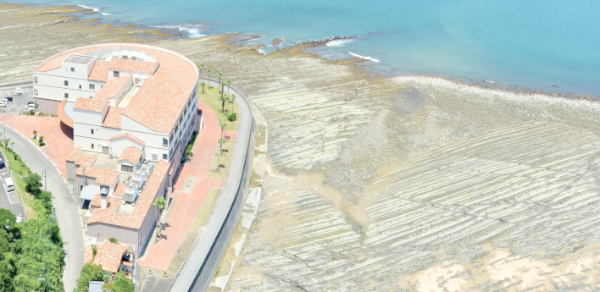
Today marks the start of the Shinkiko retreat seminar in Miyazaki. The venue is a hotel overlooking Aoshima Island and the “Oni no Sentaku-iwa” (Ogre’s Washboard) rock formations. Aoshima is a site steeped in the mythology of Yamasachihiko and Toyotama-hime; with archaeological traces of Yayoi-period rituals still present, it is regarded as a sacred place dating back to prehistoric times. The surrounding “Ogre’s Washboard” formations are natural sculptures created over millions of years as geological strata were uplifted and subsequently eroded by the waves. I am delighted to hold this retreat seminar in a new location during this year, which marks the 40th anniversary of Shinkiko. I feel a profound connection in being able to receive Ki energy on this land where prayers have been offered since ancient times.

Around the time this venue was selected, I happened to hear a radio program episode set on Aoshima. It was a show featuring readings by Tae Kimura—a program I have listened to for many years. In the story, the protagonist, feeling stuck in their career in the travel industry, visits Miyazaki and hears a story about waves from the head priest of Aoshima Shrine. The teaching was that waves follow a set rhythm—small, medium, and large—and that once a large wave passes, movement becomes possible again; therefore, one should not fight the waves but simply wait for the right moment. Hearing this allowed the protagonist to finally let go of their tension. I felt a sense of serendipity in encountering this story just after the training venue had been decided.

This concept resonates deeply when viewed from the perspective of Ki (life energy). Shinkiko is energy derived from the universe, and the Ki relay device serves to harness this energy and make it available for us to receive. By continuously receiving this energy—24 hours a day, 365 days a year—even negative Ki is gradually infused with the light-like energy of Shinkiko. No matter how heavy the negative Ki may be, it will inevitably transform into light—though this process can sometimes take time. The key is to avoid attracting further negative Ki through a negative mindset; instead, focus on finding the good in things and cultivate an attitude of surrender and trust.

Rather than trying to force your way through by struggling against the current, it can actually be a shortcut to have the courage to wait for the right moment while steadfastly receiving Shinkiko energy. We all tend to want to control things through our own efforts alone, but as beings who are part of nature, there are times when we need to surrender ourselves to the flow. Ceasing to resist and waiting quietly while receiving the energy—I feel that this, too, is a form of purifying the heart.

In this place where prayers have been offered since ancient times, I hope that through the retreat seminar starting today, each participant will become aware of the rhythmic waves within themselves and take home the key to letting go of tension.

Happiness begins with a heart that does not blame others.

There are many people who struggle to feel truly happy. One major factor behind this is a mental habit of blaming others. We tend to look for causes outside ourselves—attributing work failures to a boss or family friction to a partner’s personality, for instance.

Ultimately, however, whether or not we are happy depends not on who is to blame for our circumstances, but on how we perceive and respond to them. As long as we attribute the cause to others, we remain powerless to change anything ourselves; we are left merely waiting for other people or our environment to shift, while happiness stays forever out of reach.
If we look back, we realize that many past events were actually the result of a series of our own decisions. Even though we were the ones who chose our marriages and careers, when things go wrong, we often forget that these were our own choices—blaming instead “that person,” “the company,” or “my parents” for our situation. It is a common human tendency to let such opportunities for change slip away by shifting the blame onto others, even though changing ourselves could transform the situation.

From the perspective of Ki (energy), there is another profound reason for this. Often, the very things we attribute to other people or to negative events are actually the result of negative Ki influencing us from behind the scenes.

When strongly influenced by negative Ki (energy), one feels a growing urge to blame others or external circumstances—insisting “it’s all because of so-and-so”—while simultaneously harboring increasing regrets about decisions one had actually made oneself, dwelling on thoughts like “if only I had done things differently back then.” This negative energy tricks you into believing “it’s not my fault” while piling up regrets, draining your vitality, and leaving you exhausted. As long as you continue to blame others, your attention remains diverted from the negative energy within you; left unnoticed, this energy is never purified and continues to linger indefinitely.

Behind the mental habit of blaming others, negative Ki (energy) grows increasingly powerful—this is the true reason why those who frequently blame others drift further away from happiness. To break this vicious cycle, the first step is to pause and reflect whenever you feel the urge to say, “This is [someone else’s] fault,” by considering, “Perhaps there is some negative Ki within me as well.”
That very moment is a perfect opportunity to re-examine yourself. By receiving Shinkiko to boost your Ki and focusing on what you can do—rather than letting negative Ki overwhelm you—you can cultivate the habit of looking for the good in things. Consistently doing this strengthens the light within you and around you, creating the foundation that attracts happiness.